
Do SCADA vulnerabilities matter?

Sometimes we talk to people who are responsible for operating distributed control systems. These are sometimes linked up to remote access solutions for a variety of reasons. Still, the same people do often not understand that vulnerabilities are still found for mature systems, and they often fail to take the typically simple actions needed to safeguard their systems.

For example, a new vulnerability was recently discovered for the Siemens Simatic CP 343-1 family. Siemens has published a description of the vulnerability, together with a firmware update to fix the problem: see Siemens.com for details.

So, are there any CP 343’s facing the internet? A quick trip to Shodan shows that, yes, indeed, there are lots of them. Everywhere, more or less.
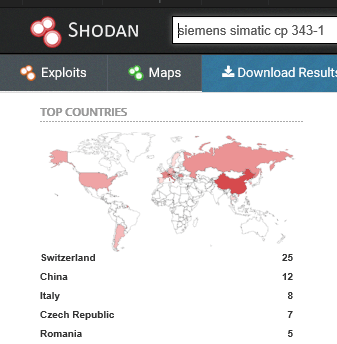
shodan_cp343

Now, if you did have a look at the Siemens site, you see that the patch was available from release date of the vulnerability, 27 November 2015. What then, is the average update time for patches in a control system environment? There are no patch Tuesdays. In practice, such systems are patched somewhere from monthly to never, with a bias towards never. That means that the bad guys have lots of opportunities for exploiting your systems before a patch is deployed.

This simple example reinforces that we should stick to the basics:

  • Know the threat landscape and your barriers
  • Use architectures that protect your vulnerable systems
  • Do not use remote access where is not needed
  • Reward good security behaviors and sanction bad attitudes with employees
  • Create a risk mitigation plan based on the threat landscape and stick to it practice too
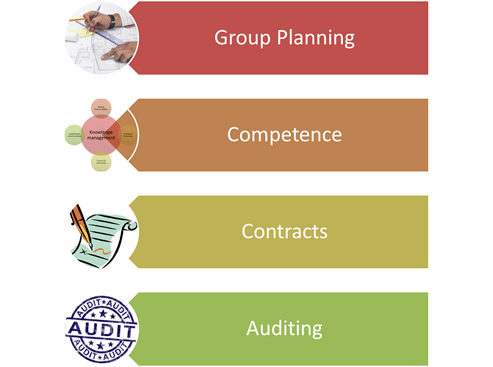
 

LEAN thinking in functional safety

Whenever something works beautifully together, like pieces in a complex piece of machinery, it creates satisfaction for everyone involved. When the system consists of people working together on a complex project, we experience this type of satisfaction when there is a situation of flow in the project. Information is treated when it is received and flows without barriers to the next person who needs to perform a task or make decision based on this information. Unfortunately, this is far from reality in most functional safety projects. These projects are typically complex, with a variety of stakeholders and various agendas and levels of competence.

071415_0731_Fourgoldenp1.png
Good project planning and execution across interfaces is necessary to achieve a lean functional safety organization throughout the lifecycle of a safety instrumented system. The opportunities for quality improvements and the banashing of waste are plentiful and many of these opportunities are low-hanging fruits.


This field could benefit greatly from lean thinking and a culture geared towards achieving flow. This, however, requires better functional safety planning, more openness between stakeholders, and a clear picture of how functional safety activities fit with the bigger picture. Lean is all about banishing waste, and there is a lot of waste in functional safety projects. Typical types of waste encountered on most projects include:

  • People waiting for input to perform the next activity. A lot of this waiting is unnecessary and due to bad planning, follow-up or lack of understanding of follow-on effects of missing deadlines
  • Unnecessary work performed – a lot of documentation is created and never used. This is related to competence levels with stakeholders and “wrong” or “ultraconservative” interpretations of standards and regulations.
  • Re-work: work done several times due to lack of information, wrong people involved, inefficient review processes, bad quality, etc.

Optimizing the whole work process requires the whole value chain to be involved, and that inefficiencies can be rooted out across organizational interfaces. By systematically removing “waste” in the functional safety value chain, I would expect that better quality and lower costs could be obtained at once. And better quality in this respect means fewer fatalities, less pollution and better uptime.